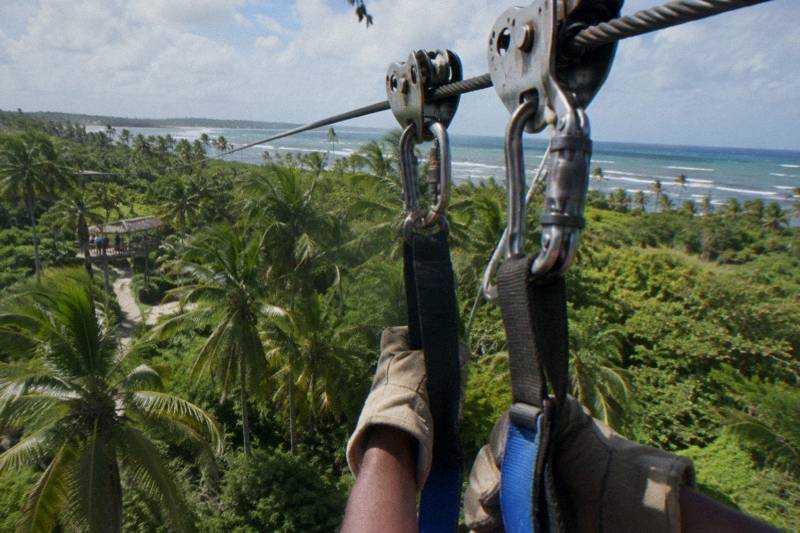
Is Ziplining Safe In Punta Cana
Every zipline listing in Punta Cana promises a safety briefing and certified guides. This guide separates what the listings actually put in place from the risks that are real, using each operator's own published rules.
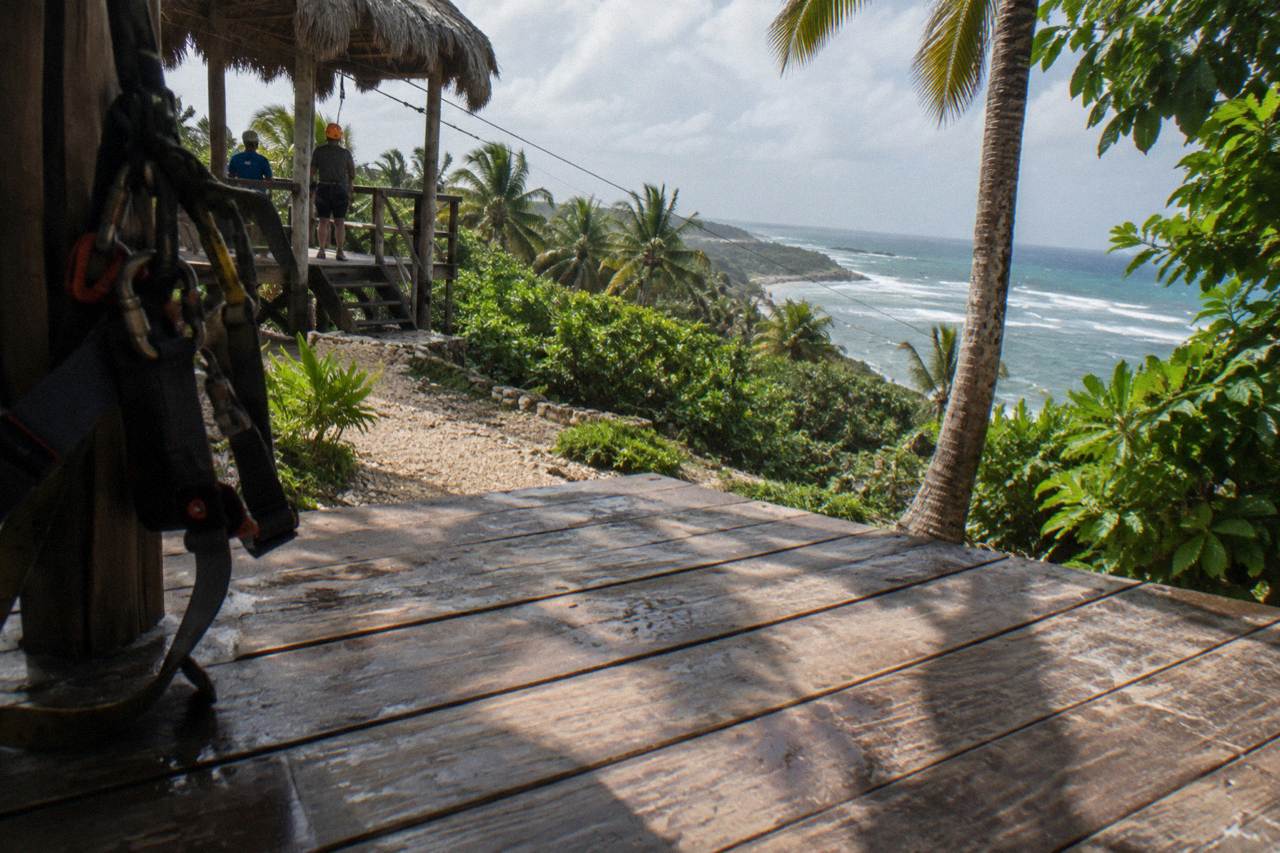
Short answer
Zipline tours in Punta Cana are run under operator-specific safety rules: harnesses, helmets, briefing lines and certified guides appear on the major listings, and Dominican adventure-tourism licensing requires annual ACCT-type certification and first-aid trained guides. Limits on age, weight and waist differ listing to listing, so check each one before booking.
Safety is usually the last question a family settles before anyone clicks a booking button. Parents want to know what happens at the platform, heavier travelers want to know the weight cutoff, and nervous first-timers want to know who stops them at the end of the cable. This page answers those questions using what the Punta Cana listings themselves publish, plus the Dominican licensing rules that sit behind them, because almost none of that detail reaches a brochure. If nerves rather than safety rules are the real holdup, this look at what first-time zipliners actually feel on the cables covers the shorter, gentler tours that ease you in.
One framing note before the details: there is no published national zipline standard for the Dominican Republic. Every age, weight, height and waist figure below is what one named listing states, and limits genuinely differ from course to course. That is not a gap in safety, it is how the industry here is built, and it is exactly why reading the specific listing matters.
What Safety Equipment Do Punta Cana Zipline Tours Use?
The zipline listings here supply the gear, and several name a briefing or training element in their stated inclusions, while some describe double cables or carbon fiber lines as part of the course design. Equipment is operator-supplied, mandatory, and fitted by staff before anyone leaves the ground. In practice the gear list is the easiest thing to verify on a listing before you book it.
The inclusions tell most of the story. The Dual Zipline Side-by-Side Adventure run by Runners Adventures lists safety equipment alongside official tourist guides and transportation. The 12-Cable Jungle Circuit from the same operator lists experienced guides, water and fresh fruit, with the safety equipment covered in its pre-tour briefing. The Carbon Fiber Lines excursion names its line material in its own title, and the listing for the 8-Zip-Line Course with a Suspension Bridge includes orientation information in writing before you ride.
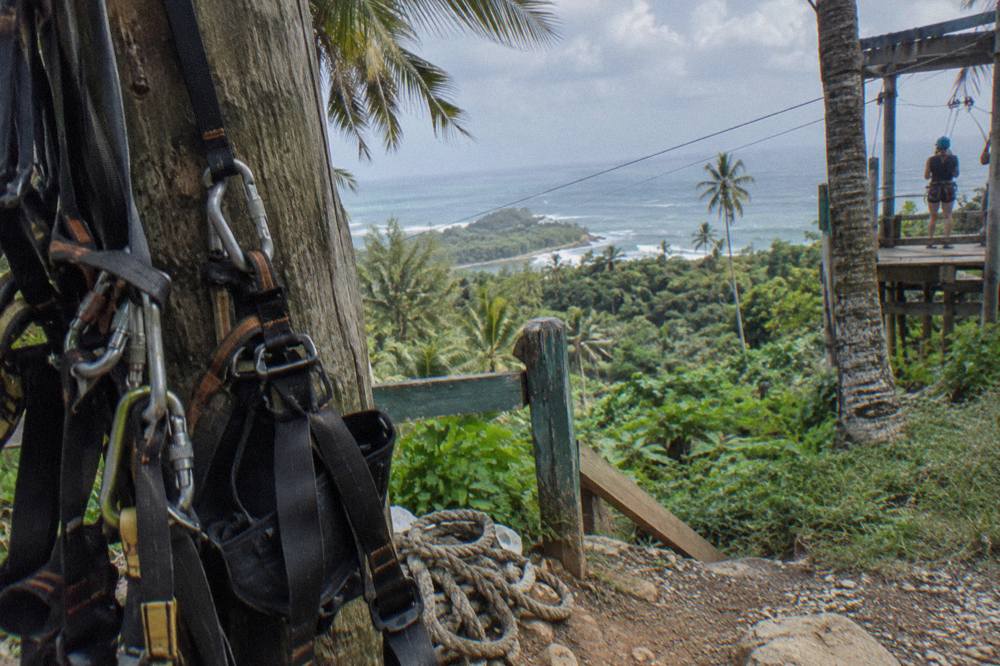
Several courses describe design features that go beyond the basics. Listings for the Runners Adventures course in the Anamuya Mountains mention side-by-side dual cables, so two riders can travel on parallel lines rather than one shared cable. The suspension bridge courses add a hanging bridge between platforms, walked rather than ridden. None of this is a promise of outcome, but it tells you the course was engineered with redundancy in mind rather than as a single line strung between trees.
| Listing (short name) | Safety items in listed inclusions | Extra design detail stated |
|---|---|---|
| Dual Side-by-Side Zipline (Runners Adventures) | Safety equipment, official tourist guides | Side-by-side dual cables |
| 12-Cable Jungle Circuit (Runners Adventures) | Experienced guides, water, soft drinks and fresh fruit | Children 6 to 12 ride the first 8 cables only |
| Carbon Fiber Lines, 2.5 Hours (Caribbean Tour Service) | None named beyond water and a fruit bowl | Course named for its carbon fiber lines |
| Suspension Bridge Course (Sol Playa tours) | Orientation information | Suspension bridge between platforms |
| Zipline Park, 4 Hours (Best Punta Cana Vacations) | Tools needed for the activity, bottled water | Maximum weight 270 pounds per the listing |
The pattern worth noticing: across all of these tours, the gear is never optional and never bring-your-own. You do not need to buy a harness or a helmet for a Punta Cana zipline day. What you do need to bring is covered in the what to wear ziplining guide, where closed-toe shoes come up again and again because open sandals are refused at the platform.
How Are Punta Cana Zipline Guides Trained And Certified?
Dominican adventure-tourism licensing requires zipline operators to hold ACCT or equivalent certification renewed annually, employ certified guides with rescue and first-aid training, maintain emergency plans, and pass technical inspections. At least one major Punta Cana operator renewed its ACCT certification for its zipline circuits in October 2026, so the framework is active, not theoretical.
The licensing requirements come from the Ministry of Tourism's adventure-tourism regulations, published as a requirements document by MITUR. It sets out what an operator must show to run canopy and zipline circuits legally: certification from ACCT, PRCA or ERCA valid for a year, guides trained in rescue and first aid, a written emergency plan, and technical inspections of the course. Runners Adventures, the operator behind several of the biggest Punta Cana listings, renewed its ACCT certification for its zipline circuits in October 2026, per a report in a Dominican news outlet.
| Requirement | What it means on the ground |
|---|---|
| Annual ACCT or equivalent certification | The course design and operation are re-checked every year, not once |
| Certified guides with rescue and first-aid training | The staff at the platform are trained for more than clipping carabiners |
| Written emergency plans | The operator must document what happens if something goes wrong |
| Technical inspections | Cables, platforms and braking systems are inspected on a schedule |
What the regulations do not publish is a fixed guide-to-guest ratio, and no primary listing states one. Listings describe group supervision in general terms: guides accompany groups along the course, brief riders at the start, and staff each launch and landing platform. If a ratio matters to you, perhaps for a school-age child traveling alone with a parent, the honest answer is to ask the operator directly before booking, because the number is not standardized and not printed on the listings.
The safety briefings themselves are a legal and practical fixture. Several of these listings name a safety briefing, orientation or training session in their inclusions, and the Bavaro Adventure Park passes list equipment, training and a safety briefing together. That repetition is the point: by the time you reach a long line, you have heard the same instruction several times.
If you want a deeper comparison of two formats, the zipline versus canopy tour guide explains how the two course styles differ, because the safety feel of a course partly depends on whether you are flying between platforms or walking a canopy circuit.
What Do Operators Check Before You Fly?
Before the first line, staff fit your harness and helmet and run a briefing or practice line, and each listing prints its own weight and waist limits: one states a maximum of 127 kg (280 lb) and a 112 cm (44 in) waist, another caps at 285 lb, a third at 270 lb, and a fourth allows up to 300 lb. That spread is why reading the specific listing matters.
The fitted checks are the visible part. Staff size the harness to your body, check the carabiners and lanyards, and fit the helmet. The listing for the Zipline Canopy Adventure with Hotel Pickup names a safety briefing and training session plus all necessary equipment and helmets in its inclusions. The Half-Day Zipline Tour from Los Corales Transporte turistico lists zipline equipment and a guide among its inclusions. Every tour listing that names equipment at all names it as included, never rented.
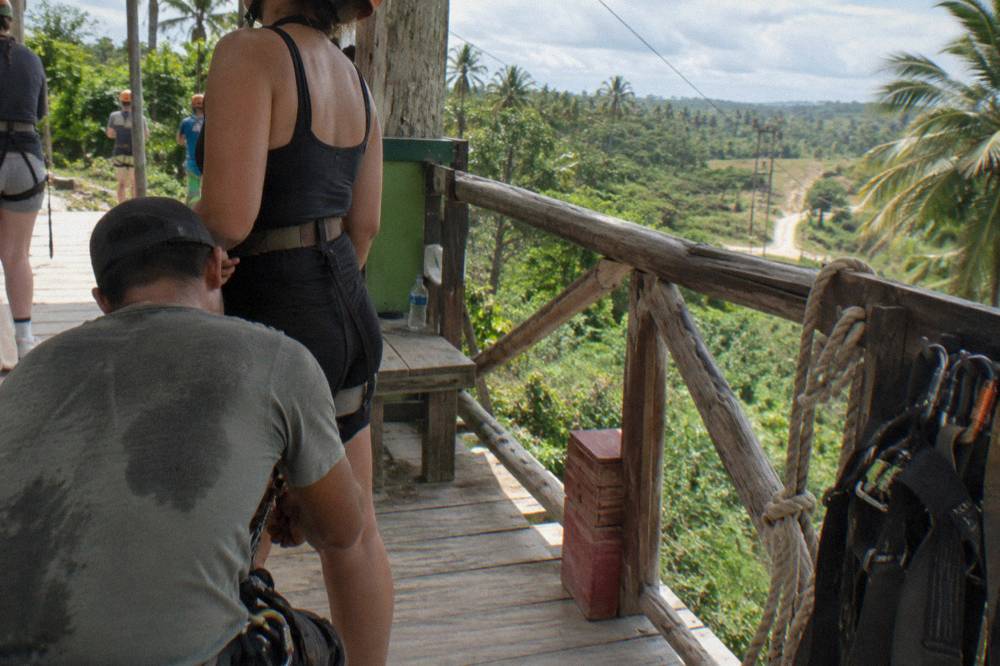
The weight and waist screen is where the listings genuinely differ, and no single figure is a Dominican Republic norm. The table below is drawn from each listing's own restrictions text, and it is the single most important thing a heavier rider should read before choosing a tour. More detail, including the weighing question, is in the zipline weight limit guide.
| Listing (short name) | Stated limit |
|---|---|
| 12-Cable Jungle Circuit | Max 127 kg (280 lb), max waist 112 cm (44 in) |
| Dual Side-by-Side Zipline | Max 285 lb, max waist 44 in |
| Zipline Park, 4 Hours | Max 270 lb |
| Suspension Bridge Course | Ages 5 and up, max 300 lb |
| Monkeyland Zipline, Lunch Included | Min 20 kg (44 lb), max 127 kg (280 lb), max waist 112 cm (44 in) |
| Bavaro Adventure Park listings | Min height 1.30 m (4.27 ft), max 130 kg (280 lb) |
Whether you get weighed on the day is a separate question, and the listings do not say how riders are checked against the limit. The rule for you as a reader: treat the printed limit as binding either way, and if you are near the cutoff, choose a course whose limit gives you margin rather than one you might fail on the platform. The operator's confirmation email and the listing's restrictions section are the two places the number is authoritative.
The medical screen is quieter but real. Listings across the Anamuya, Bavaro and Cap Cana courses state that ziplining is not recommended or not permitted for pregnant travelers, people with heart or cardiovascular conditions, back or spinal issues, respiratory problems, reduced mobility or vertigo, or recent surgery. That is a description of what operators publish, not medical advice, and anyone with a condition should ask a doctor and message the operator before booking rather than deciding at the base camp.
The Dual Side-by-Side Zipline by Runners Adventures, from $90 per person for a 6-hour day with hotel pickup listed, is rated 4.8 from 606 reviews, and its listing states the 285 lb and 44-inch waist maximums plainly in its restrictions, which is the kind of specificity that makes a safety comparison easier. It also lists free cancellation, so a family that reads the limits and realizes one member is over them can cancel without penalty. Check availability
What Are The Real Risks Of Ziplining In The Dominican Republic?
The real risks split into three groups: risks the equipment and briefing are designed to manage (braking, harness fit, platform procedure), risks the published limits manage (weight, waist, age, height), and risks nobody can eliminate (weather, individual health, rider error such as grabbing the cable). No zipline activity is risk-free, and no honest source on this topic prints a Dominican injury rate, because no statistic of that kind has been published. Weight is the limit riders ask about most, and our article on how rider weight changes zipline speed explains how Punta Cana crews use braking and equipment to keep heavier fliers inside a safe range.
Starting with what the industry manages: braking and arrival. Courses here use guide-controlled or rider-assisted braking at the landing platforms, and the briefing teaches the hand position. Rider error, reaching up to grab a moving cable with a bare hand, or arriving with limbs in the wrong position, is the category the briefing and the platform staff exist to catch. This is why the training cable matters and why listings keep repeating the same instructions.
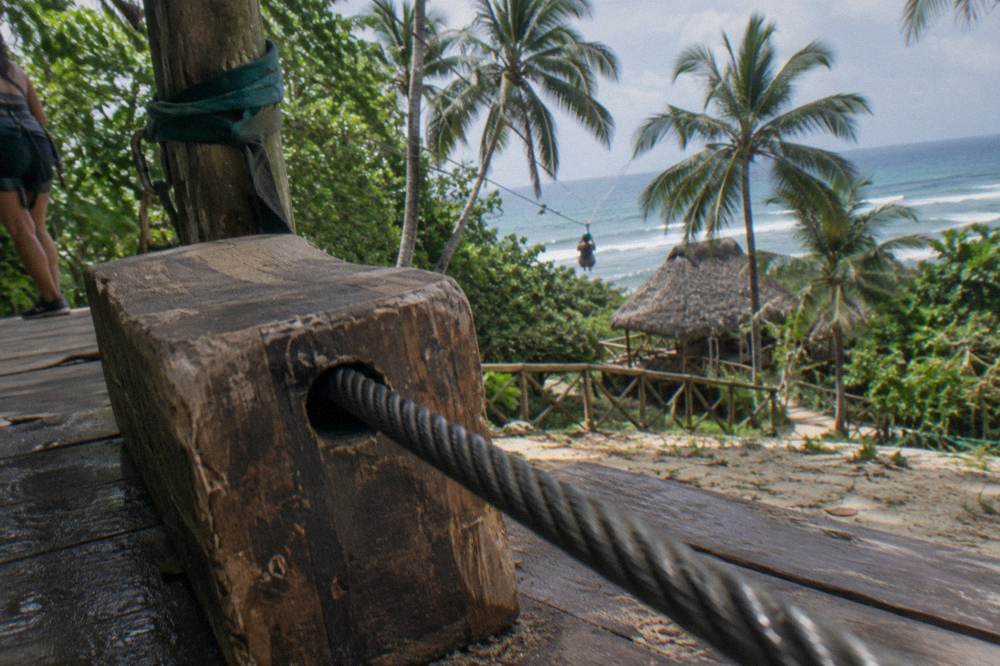
Second, the limits manage real physics. A rider over a cable's designed weight range changes how the cable behaves, which is exactly why every listing prints a maximum and why the numbers differ between courses built with different cables and braking systems. The physics of heavier riders, in general terms and without speed figures, is covered in the blog post do heavier people go faster on ziplines, because the answer explains why the limits exist rather than just stating them.
Third, the risks outside anyone's control. Weather is the obvious one: lines close or tours reschedule at the operator's judgment, and the listings' cancellation terms, not a promise from any website, decide what happens next. Personal health is the other: the medical restrictions above exist because a zipline day is a moderately physical one, with jungle walks between platforms and heat and humidity that reviews describe as sweaty work.
What does not belong in an honest answer is a number. There is no published zipline incident report or injury statistic for Punta Cana or the east of the country, so any rate quoted without a named source should be treated with suspicion. Recent guest reviews on the live listings describe attentive staff and reliable equipment, which is real but anecdotal evidence, not a statistic. Treat any website that quotes a Punta Cana zipline injury rate without a named source as making the number up.
What Age, Height And Weight Limits Apply At Each Park?
Age limits cluster around 6 years minimum on the Anamuya courses, 5 years on one suspension bridge course, and 6 years for passengers at Bavaro Adventure Park with a 1.30 m minimum height, while buggy drivers must be 18 with a valid licence. Weight maximums range from 270 lb to 300 lb depending on the listing. Every figure belongs to one named listing, and none is a Dominican Republic norm.
The spread is easier to see than to describe. The infographic below stacks the published limits from these listings and their verified texts side by side, so you can match a family member to a course in one glance rather than opening six listings.

Two details deserve words. Children between 6 and 12 on the 12-Cable Jungle Circuit ride only the first 8 of the 12 cables, per the listing, a shorter route rather than a flat refusal. And the Monkeyland combo sets a minimum weight of 20 kg (44 lb) as well as a maximum, because very light riders can also behave differently on a cable, arriving with less momentum. For a fuller walkthrough by age, the zipline age limits guide covers which listings work for which ages.
| Course or park | Minimum age | Minimum height | Maximum weight |
|---|---|---|---|
| 12-Cable Jungle Circuit | 6 (under 13 limited to 8 cables) | Not stated | 127 kg (280 lb) |
| Suspension Bridge Course | 5 | Not stated | 300 lb |
| Monkeyland Zipline combo | 6 | Not stated | 127 kg (280 lb) |
| Bavaro Adventure Park ziplines | 6 as passenger | 1.30 m (4.27 ft) | 130 kg (280 lb) |
| Zipline Park, 4 Hours | Not stated | Not stated | 270 lb |
The buggy element adds driver rules: the Bavaro Adventure Park listings require drivers to be 18 with a valid licence, and the Buggies, Zipline, Horses and Cenote combo sets 18 as the minimum driving age. It is a safety rule for the ground portion of the day, and it catches families out when a teenager expects to drive.
Is Ziplining Safe For Kids In Punta Cana?
For children, the published rules do the deciding: minimum ages of 5 or 6 depending on the listing, the under-13 restriction to the first 8 cables on the 12-cable circuit, a minimum weight of 20 kg (44 lb) on the Monkeyland combo, and adult accompaniment expectations on most courses. Nothing here is a verdict on your child; the listings set the boundaries and the parents set the readiness.
The Anamuya listings state age 6 as the floor, with the cable restriction for 6 to 12 year olds noted above. The suspension bridge course goes younger, ages 5 and up per its listing, with its 300 lb maximum. Bavaro Adventure Park requires passengers to be at least 6 and 1.30 m tall. Scape Park's own rules page states zipline minimums including a minimum weight of 60 lb (27 kg) for its circuit, so a small six-year-old could clear the age and miss the weight, which is exactly the kind of detail a listing check catches.
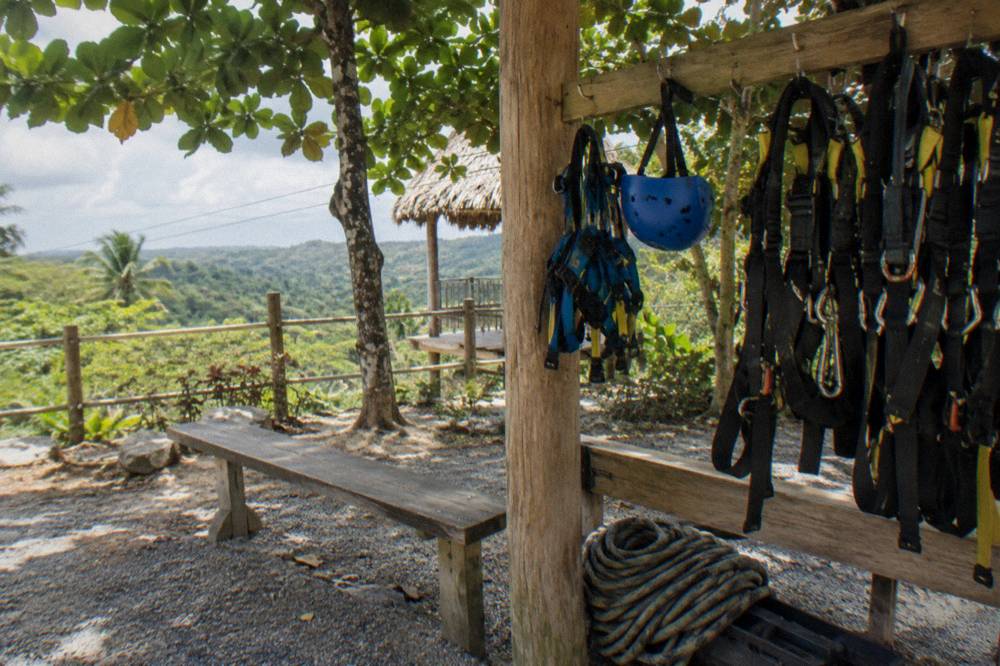
Readiness is separate from permission. A child who meets every limit may still freeze at the first platform, and reviews of family days mention nervous first lines followed by requests to go again. Ask the operator before booking how they handle a child who changes their mind mid-course, because the answer is a good signal of how the operation is run generally.
The parks also give families a hedge. La Hacienda Park lists kids' club access among its inclusions on the multi-activity ticket, so a family with one ziplining child and one too-young child has somewhere structured for the younger one while the circuit runs. Bavaro Adventure Park bundles a waterfall pool and cenote into its full-access pass, which turns a safety-wait into part of the day.
What Happens If It Rains Or A Storm Is Forecast?
Whether a line runs in rain is the operator's call under each listing's own cancellation terms, and these tour listings say tours can be cancelled or rescheduled for weather rather than promising to run in anything. Atlantic hurricane season runs from June 1 to November 30 per the National Hurricane Center, and every tour listing here offers free cancellation, so a storm forecast does not trap your money.
The honest structure of the answer: light rain does not automatically close a course, and many run in passing showers, but the decision belongs to the operator on the day, guided by their cancellation terms. The listings state reschedule or refund options for weather cancellations, and the free-cancellation flags across these listings mean a pre-booked day can be pulled in advance. No operator promises a run in any conditions, and neither does this site, because a promise like that would be false the first time a squall line crossed the coast.
| Situation | What typically happens | Where it is decided |
|---|---|---|
| Brief shower mid-tour | Tour usually continues; gear gets wet | Operator on the day |
| Sustained heavy rain | Lines may pause or the tour reschedules | Operator on the day |
| Tropical storm or hurricane warning | Tours cancelled or rescheduled | Operator plus authorities |
| Forecast you trust more than the operator | You cancel under free cancellation | You, before the deadline |
Seasonal context helps with planning even though it decides nothing alone. The wetter stretch of the Punta Cana year runs roughly May into November with a peak in the autumn months, and the drier stretch runs December to April, with October rainfall typically cited in the 145 to 163 mm range against roughly 85 to 91 mm in December. Those are typical figures from climate summaries, not forecasts. The Punta Cana hurricane season guide and the ziplining in the rain guide cover both the season and the wet-day decision in full.
One practical note for the day itself: rain makes platforms and stairs slick, which is where closed-toe shoes with grip earn their place on every packing list, and why the outfit advice is not cosmetic. A cheap rain poncho folds into a pocket and matters more than a camera, since loose phones are not allowed on several courses anyway.
How Do You Vet A Zipline Operator Before Booking?
Vet an operator in four checks: read the listing's restrictions section for real limits, confirm the inclusions name equipment, guides and a briefing, look for free cancellation, and confirm pickup details if transport matters to your hotel zone. A listing that prints specific numbers is easier to hold to account than one that says only that it is safe.
Specificity is the tell. A listing that states a 127 kg maximum, a 112 cm waist limit and a rule for 6 to 12 year olds has published rules a guest can point to. A listing that says nothing about limits is not necessarily unsafe, but it gives you nothing to check against, and the honest move is to message the operator and get the numbers in writing before paying. The same logic applies to pickups: six of these listings do not state or confirm pickup, and assuming a hotel van will appear is how a day goes wrong before it starts.
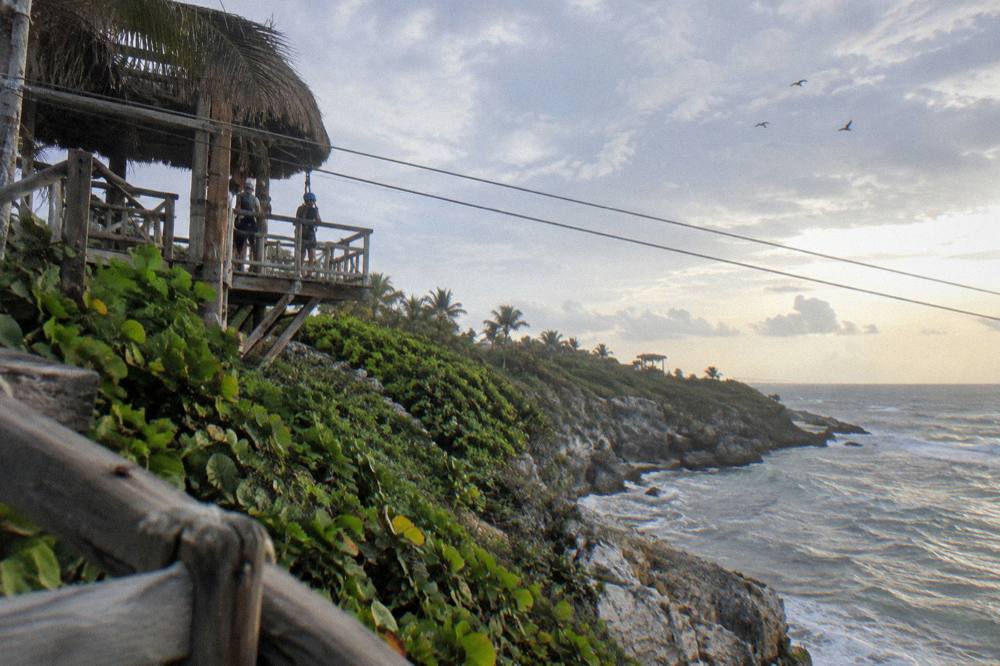
The review pool matters more than the star. The Monkeyland, Ziplines and Buggies Bundle carries 4.9 from 13,839 reviews, the most-reviewed product among these tours, and the Tuko Zipline Adventure with Buggies and Horseback Riding carries 4.9 from 5,399. Those are large pools. A 5.0 from three reviews is a rating from three people, not a guarantee, and small-pool listings should be read as less information rather than better information. Print the count beside any rating you compare, always.
| Check | What to look for | Why it matters |
|---|---|---|
| Restrictions section | Real age, weight, height, waist numbers | Binding rules you can verify against your group |
| Inclusions list | Safety equipment, guides, briefing named | Confirms the operator supplies and states the basics |
| Cancellation terms | Free cancellation window stated | Weather or a limit problem does not cost the fare |
| Review count | Rating printed with its pool size | Big pools are information; tiny pools are not |
| Pickup line | Pickup listed, or check the listing | Six of these listings do not state or confirm pickup |
Finally, the paperwork question a careful reader may already have: operators running legally hold the adventure-tourism license described above, with annual certification, and you can ask an operator for proof of current certification before booking. A confident operator answers that question in one email. For a wider comparison of the whole market including prices across every listing, the Punta Cana zipline tour prices guide puts every tour side by side, and the broader question of choosing a course is covered in the best zipline in Punta Cana guide. If anyone in your party is expecting, the ziplining while pregnant in Punta Cana guide explains which health restrictions apply.
The throughline of this whole page: safety on a Punta Cana zipline is not a vibe, it is a set of published, checkable rules, from the MITUR licensing framework down to the waist measurement in a single listing's restrictions section. The reader who reads one listing's rules end to end before booking has done more for their own safety than any general reassurance could. For everything else, from age planning to rainy-day calls, Zipline in Punta Cana has the full comparison across every tour.
The 12-Cable Jungle Circuit is a good example of a listing that publishes its rules plainly: children 6 to 12 ride the first 8 cables, the maximum weight is 127 kg (280 lb) and the maximum waist is 112 cm (44 in), all stated on the listing alongside hotel pickup, water, fresh fruit and experienced guides, from $90 per person for a 5-hour day with free cancellation listed.
For the full-day version of the same mountain course, the Adventure Bundle covering Monkeyland, the 12-cable circuit and buggies runs 9 hours 30 minutes from $209 per person, with lunch listed, and its restrictions state minimum age 6, minimum weight 20 kg (44 lb) and maximum weight 127 kg (280 lb) for the ziplines. Pickup is not stated on this listing, so check the listing before counting on a hotel van.
At the Bavaro end, the Zipline Mega Splash at Bavaro Adventure Park states its own limits, a minimum height of 1.30 m (4.27 ft) and a maximum weight of 130 kg (280 lb), on a 3-hour pass from $99 per person that includes lunch, hotel transfer and all equipment, which makes it the easiest listing to match against a family with mixed heights.
Common Questions About Zipline Safety
Is Ziplining Safe In Punta Cana?
Listings in Punta Cana consistently include harnesses, helmets, safety briefings and certified guides, and Dominican licensing requires annual certification, first-aid trained guides, emergency plans and technical inspections. No activity like this is risk-free, and no national injury statistic exists to quote. The honest answer: the safety systems are published and checkable, so read the specific listing's limits and restrictions before booking.
What Is The Weight Limit For Ziplines In Punta Cana?
There is no single limit. Published maximums across these tours range from 270 lb to 300 lb: 127 kg (280 lb) on the 12-Cable Jungle Circuit and the Monkeyland combo, 285 lb on the Dual Side-by-Side Zipline, 270 lb on the Zipline Park listing, 300 lb on the Suspension Bridge Course, and 130 kg (280 lb) on the Bavaro Adventure Park listings. Check the listing you are actually booking.
Do You Get Weighed Before Ziplining In Punta Cana?
Not universally. The listings do not describe how riders are checked against the limit, so treat the printed limit as binding either way, and if you are close to the cutoff, pick a course with margin. The blog post on this site about being weighed before ziplining covers the detail.
Can Children Go Ziplining In Punta Cana?
Yes, within each listing's rules. Minimum ages are 6 on the Anamuya listings, 5 on the Suspension Bridge Course, and 6 as a passenger at Bavaro Adventure Park with a 1.30 m minimum height. On the 12-Cable Jungle Circuit, children 6 to 12 ride only the first 8 cables, and the Monkeyland combo sets a minimum weight of 20 kg (44 lb).
Is Ziplining Safe If You Are Scared Of Heights Or Pregnant?
Listings across the region state that ziplining is not recommended or not permitted for pregnant travelers, and several name vertigo, heart conditions, back issues and recent surgery as restrictions too. This site gives no medical verdict. Ask a doctor and message the operator before booking; the nervous-beginner experience is covered separately on this site in the post about whether zip lining is scary for beginners.
Are Punta Cana Zipline Tours Cancelled When It Rains?
Sometimes. Whether a line runs in rain is the operator's call under the listing's cancellation terms, and tours can be rescheduled or refunded for weather rather than running in anything. Every listing here offers free cancellation, so a forecast you do not trust can be cancelled in advance. Atlantic hurricane season runs June 1 to November 30.