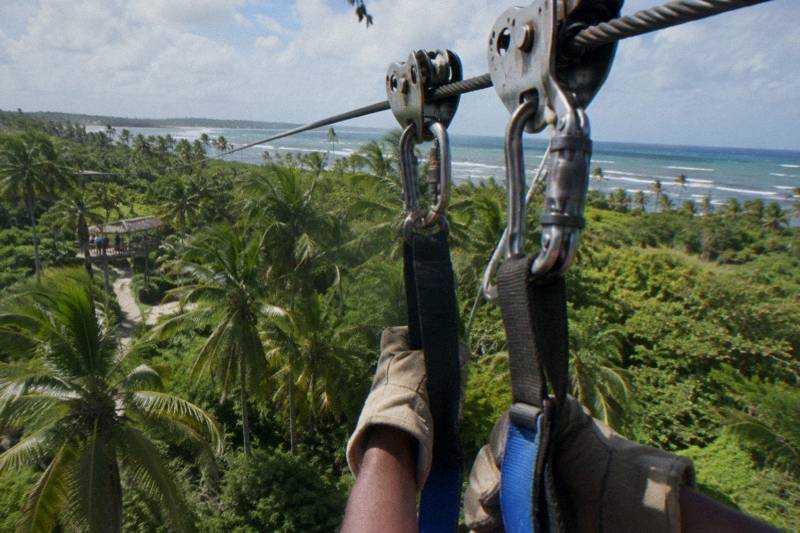
Do You Get Weighed Before Ziplining?
Whether Punta Cana zipline courses weigh riders on site, what the listings actually state about weight and waist limits, and how to prepare before you book.
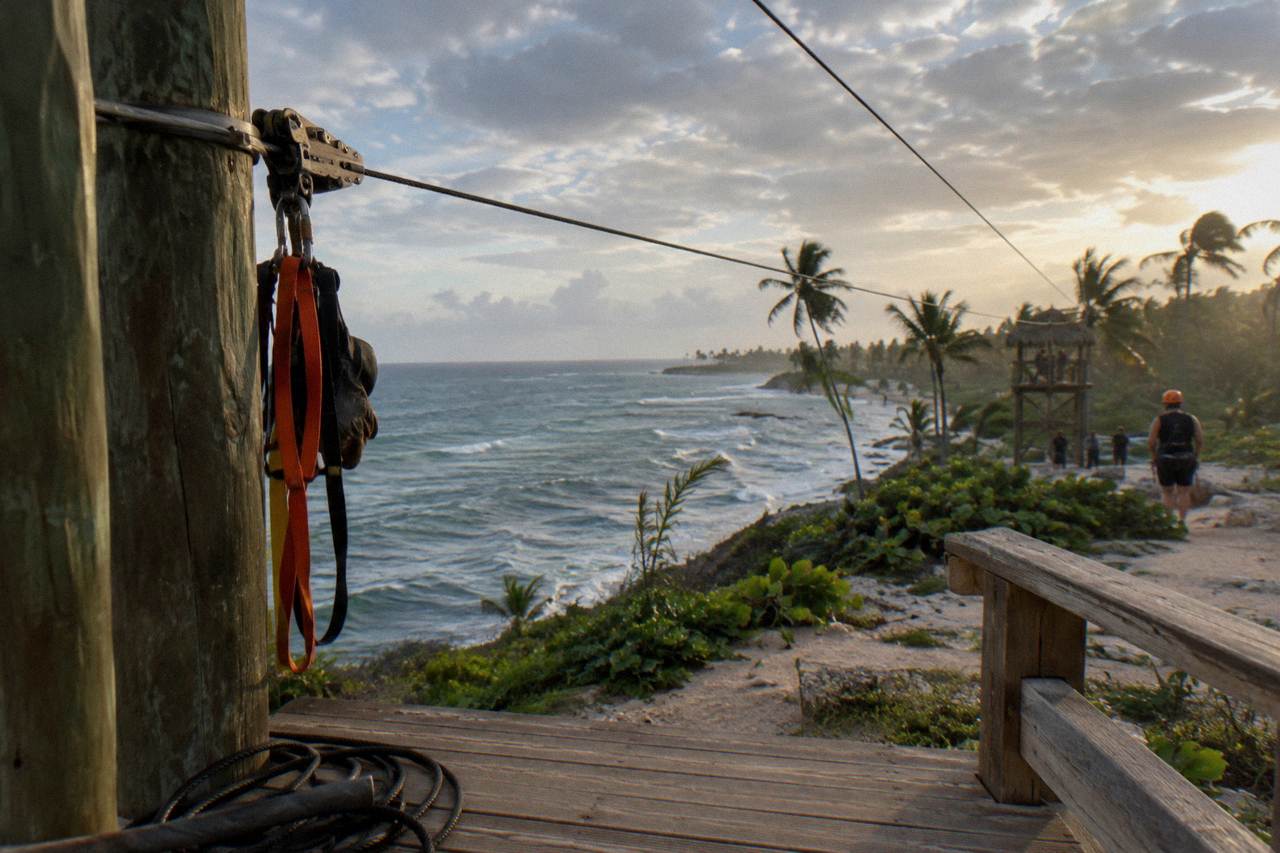
Whether you step on a scale depends entirely on the operator, and no Dominican Republic law or national standard requires it. Punta Cana zipline listings publish weight and waist limits but do not describe an on-site weighing procedure for most courses, so the honest answer is: limits are always enforced, a scale is sometimes present, and you should ask the operator before booking rather than assume either way. Since weight limits and weighing practices vary from course to course, the Punta Cana versus Puerto Plata zipline comparison spells out what operators in each region actually say before you book.
The question sounds trivial until you are standing at a jungle platform in front of a group of strangers. Weight matters on a zipline for real physical reasons, and many operators publish a maximum in the listing, which means they have some way of checking it. What differs, course to course, is whether that procedure involves an actual scale, a harness fit check, or simply a signed declaration on the booking form.
There is no published national zipline standard for the Dominican Republic. Adventure tourism licensing does exist, and the Ministry of Tourism's requirements for adventure operators cover guide certification, rescue training and technical inspections, but a mandatory weigh-in is not something any listing or official page describes. That leaves each operator to set its own numbers and its own checking method, which is why this article works listing by listing instead of giving you a single rule.
If you want the short version of the practical advice: read the weight and waist limits on the specific listing before you book, because they are printed there, and message the operator if you are within a few pounds or kilograms of the number. Operators deal with this question constantly and would much rather answer it in advance than turn someone away at the platform. That same habit of checking details up front pays off beyond the platform, and our guide to the scams and surprise costs to avoid in Punta Cana helps you pick a zipline day without the headaches.
Why Courses Have Weight Limits At All
Zipline cables, trolleys and braking systems are engineered around a load range, not an unlimited one. A heavier rider arrives at the landing platform with more energy to dissipate, and a very light rider can stall short of it, so operators publish a minimum and a maximum to keep every arrival inside the envelope their equipment and braking method were designed for. The limits are engineering numbers, not judgment calls about body size.
The physics is straightforward even when the social side is not. Gravity accelerates every rider the same way, but a heavier rider carries more momentum at the bottom of the line, which means the brake, the mat, the guide catching you, or the self-braking system has more work to do. Courses built with hand braking by guides at each platform size their crews around an assumed rider range. Courses with automatic magnetic or centrifugal brakes are calibrated for that same range, and a rider far outside it can hit the arrest zone too fast or too slow.
Light riders have the opposite problem, and it is why several listings also publish a minimum weight. A rider below the minimum sometimes cannot make it across a long line, particularly against wind, and finishes the crossing stranded mid-cable until a guide retrieves them. The Monkeyland and zipline combo listing states a minimum weight of 20 kilograms (44 lbs) for exactly this reason, alongside its maximum of 127 kilograms (280 lbs).
None of this is unique to Punta Cana. The same min-and-max structure shows up on canopy courses worldwide, and it is also why the harness matters, which is where the waist measurement comes in. A harness that cannot close safely around a rider's waist cannot do its job no matter what the scale says. More on that in the waist section below.
What Punta Cana Listings Actually State
Many Punta Cana zipline courses publish their own limits, and they genuinely differ: maxima among these tours run from 270 lb to 300 lb depending on the listing, minimums range from age 5 to age 6, and waist limits appear on several but not all. The numbers below are quoted from each listing as written, and the Dominican Republic sets none of them as a national rule.
The table gathers the restrictions each listing publishes. Read the row for the course you are actually considering, not the row above it, because a 10-pound difference between operators is real and can decide whether you ride. Weight is only half the eligibility question, and our guide to ziplining at seventy covers the age side of it just as plainly.
| Course (listing) | Published weight limits | Other stated restrictions |
|---|---|---|
| 12-Cable Jungle Circuit (Runners Adventures) | Max 127 kg (280 lb), max waist 112 cm (44 in) | Children 6 to 12 ride only the first 8 cables |
| Dual Side-by-Side Zipline (Runners Adventures) | Max 285 lb, max waist 44 in | Stated on the listing |
| Monkeyland and Zipline combo (Runners Adventures) | Min 20 kg (44 lb), max 127 kg (280 lb), max waist 112 cm (44 in) | Minimum age 6 |
| Suspension Bridge Course (Sol Playa tours) | Max 300 lb | Ages 5 and up |
| Zip Line Park (Best Punta Cana Vacations) | Max 270 lb | Stated on the listing |
| Bavaro Adventure Park courses | Max 130 kg (280 lb) | Minimum height 1.30 m (4.27 ft); buggy drivers 18 plus licence |
Two things stand out. First, the spread is wide: 270 lb on one park listing, 300 lb on another, with most courses clustered at 127 to 130 kg. Second, several listings add a waist circumference cap, which is a harness-fit limit rather than a cable-load limit, and which catches some riders that the scale alone would not. The Zipline in Punta Cana homepage comparison carries every tour on this site if you want to sort courses by these numbers side by side.
What almost none of these listings describe is the checking procedure. The 12-cable listing prints the limits; it does not say riders step on a scale. The Bavaro Adventure Park information page states its height and weight restrictions and its equipment policies, and its official FAQ covers gear, but neither page describes a weigh-in station. Where a scale exists, it is an operational detail that lives in the operator's day-of routine, not in the marketing copy. For the full picture on the numbers themselves, the companion guide on zipline weight limits in Punta Cana goes deeper.
Do They Weigh You Discreetly Or In Front Of The Group?
Where an operator does weigh riders, the check is usually folded into the gear-up routine at the harness station rather than staged as a public event, but no Punta Cana zipline listing describes the exact procedure, so treat any description of a discreet scale as operator practice rather than a promise. The reliable protection is asking the operator beforehand how the check is handled.
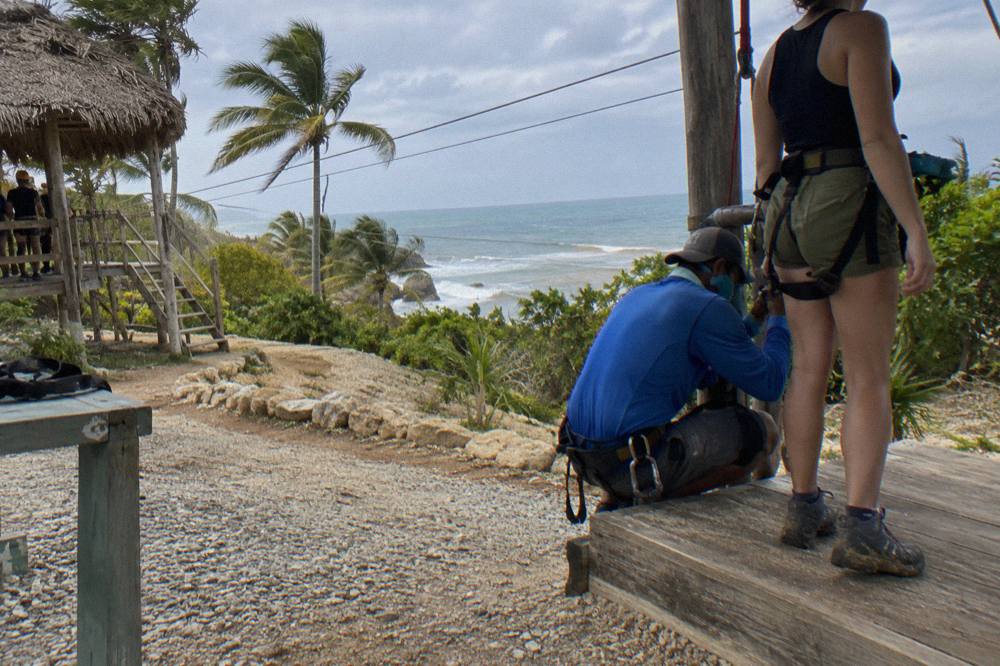
This is the part of the question the listings do not answer, and it is the part that actually worries people. Nobody relishes being weighed in front of a tour group, and the fear of that moment stops some travelers from booking at all. The practical reality, based on how canopy courses describe their operations, is that the equipment fitting is a busy, hands-on process: guides hand out helmets, adjust harnesses, check carabiners and run a briefing, and any weight check tends to happen inside that flow rather than as a separate announcement.
If the anxiety is a real barrier, you have options that remove it entirely. Booking a private transfer tour, like the private transport zipline listing at 3 hours from $79 per person, often means a smaller group at the platform, and private bookings let you raise the question with the operator directly before the day. You can also state your weight honestly on any booking form that asks, which moves the conversation to email where it belongs, and message the operator through the live listing asking how they check.
What you should not do is guess low. The numbers exist for braking and harness reasons covered above, and a rider who misstates weight creates a genuine equipment problem for the guides, not just an awkward moment. Operators in the Anamuya Mountains and at the parks around Bávaro handle this conversation every single day; you will not be the first person to ask.
What Happens If You Are Over The Limit
Being over a course's published maximum usually means being unable to ride that course, with a refund or reschedule handled under the listing's cancellation terms rather than on the platform, and free cancellation is listed on every zipline tour among these Punta Cana listings, typically up to 24 hours before. The clean fix is checking the number before you book, since the tours compared here span 270 lb to 300 lb and a different course may fit.
The mechanics of a refusal are unglamorous. A guide who cannot safely fit a harness or whose course maximum is exceeded will decline the rider for that activity, and the tour continues for everyone else. On combo tours that is a partial loss, the buggy or horseback portion may still be open, which is one reason combo listings state per-activity limits separately: the cenote swim combo listing, for example, sets a minimum age of 6 for horseback riding and zipline but 18 to drive buggies. On a pure zipline tour it means sitting out the whole course.
The financial side is better than most people expect. Every zipline and combo listing on this site shows free cancellation, generally until 24 hours before departure, and the operator's own weather and safety terms govern day-of calls. That is precisely why this article keeps repeating one instruction: read the limit row for your course, then message the operator if you are near the line. A five-minute exchange before payment beats a platform-side conversation after a 40-minute drive into the mountains.
There is also a planning angle worth naming. Among the tours compared here, the most flexible course on paper is the Suspension Bridge Course at 3 hours from $75 per person, whose listing states ages 5 and up and a 300 lb maximum, the highest limit of any tour on this site. Top courses with a stated limit include the Monkeyland and Zipline combo, 4.8 from 1,227 reviews, from $130, and the Monkeyland, Ziplines and Buggies bundle, 4.9 from 13,839 reviews, from $209, both holding to 127 kg. Choosing between them on limits alone is legitimate trip planning, not an admission of anything.
Waist Circumference: The Other Number That Matters
Three listings on this site pair the weight maximum with a waist maximum: the 12-cable circuit and the Monkeyland and Zipline combo at 112 cm (44 inches), and the dual side-by-side listing at 44 inches, because a harness that will not close safely is disqualifying regardless of what a scale reads. Waist is a fit check done with a harness and a guide's hands, not a measurement you can talk your way past.
The waist limit surprises people who prepared only for the scale question. A zipline harness is a load-bearing device with a defined range of adjustment: the waist belt and leg loops must close with overlap left in the webbing so the buckle holds its rated strength. When the listing for the 12-cable course says maximum waist 112 cm, it is telling you the largest circumference their largest harness accommodates at safe adjustment. The same figure appears on the Monkeyland combo listing and, in inches, on the dual side-by-side listing.
This is also why the gear-up routine doubles as the real check even where no scale exists. A guide fitting a harness learns immediately whether the equipment closes correctly, and that hands-on fitting is the step every operator performs regardless of its weighing policy. Some riders well under the weight maximum have a body shape that a given harness line does not fit, and some riders near the maximum fit fine; the two numbers together give the honest picture.
If you are close to 112 cm, the practical move is the same as for weight: contact the operator through the listing before booking and ask what they do when a rider is over the waist number. Some parks stock an oversized harness, some do not, and the listing text will not tell you which. The companion guide on what to wear ziplining in Punta Cana covers how clothing choices change harness fit too, since bulky layers can turn a comfortable fit into a marginal one.
Children And The Weigh-In
Children face the mirror-image problem: minimums, not maximums, and the listings set both an age floor, usually 6 with one course at 5, and on the Monkeyland combo a minimum weight of 20 kg (44 lb), because a light child can stall on a long line. Parents are not usually weighing kids at the platform; the age rules are checked at booking and the harness fit does the rest.
The age floors on this site are explicit. The Monkeyland combo and the 12-cable circuit both set a minimum age of 6, and the 12-cable listing adds that children 6 to 12 ride only the first 8 cables of the course. The Suspension Bridge Course listing goes the other way, ages 5 and up, making it the lowest entry age among these tours. The Bavaro Adventure Park listings use height instead for passengers, 1.30 meters minimum, which effectively covers the same ground for small kids.
The 20 kg minimum on the Monkeyland combo is worth a sentence of explanation for anxious parents, because it sounds ominous and is not. A very light rider crossing a long cable into wind may not reach the far platform, which is inconvenient and a little frightening, not dangerous, since guides retrieve stalled riders routinely. The minimum exists to keep kids moving all the way across every line. If your child is around that weight, mention it when booking and the operator will say which lines suit them.
For families comparing courses by these rules, the age limits guide for Punta Cana ziplines lays out every floor and child restriction on one page, and the blog on whether heavier riders go faster explains the same physics from the other end.
How To Prepare Before You Book
Weigh yourself at home on a normal day, read the specific course's published limits on its listing, and if you are within about 5 kg or 2 inches of any maximum, message the operator through the listing and ask how they handle the check. Those three steps take ten minutes and eliminate nearly every bad outcome, including the platform refusal and the public-weigh anxiety.
Beyond the scale, a few preparations make the day smoother. Wear clothes that let a harness sit flat against the body; the listings on this site ask for closed-toe shoes, and bulky waistbands or thick jackets complicate the fit check. Arrive knowing your honest numbers rather than optimistic ones, and if the tour includes water elements, like the cenote swim combo, bring what the listing suggests for those parts.
Booking choice matters as much as preparation. The three courses below cover the range of published limits among these tours: the 12-cable circuit with its 127 kg and 112 cm figures and the child rule for ages 6 to 12, the dual side-by-side line at 285 lb and 44 inches, and the suspension bridge course at 300 lb with ages 5 and up. Checking availability on the one that matches your numbers is the last step of the preparation, and the cancellation terms on each listing give you the exit if the operator's answer to your weigh-in question is not the one you wanted.
| Course | From price | Duration | Limit to check first |
|---|---|---|---|
| 12-Cable Jungle Circuit | $90 per person | 5 hours | 127 kg / 280 lb, waist 112 cm |
| Dual Side-by-Side Zipline | $90 per person | 6 hours | 285 lb, waist 44 in |
| Suspension Bridge Course | $75 per person | 3 hours | 300 lb, ages 5 and up |
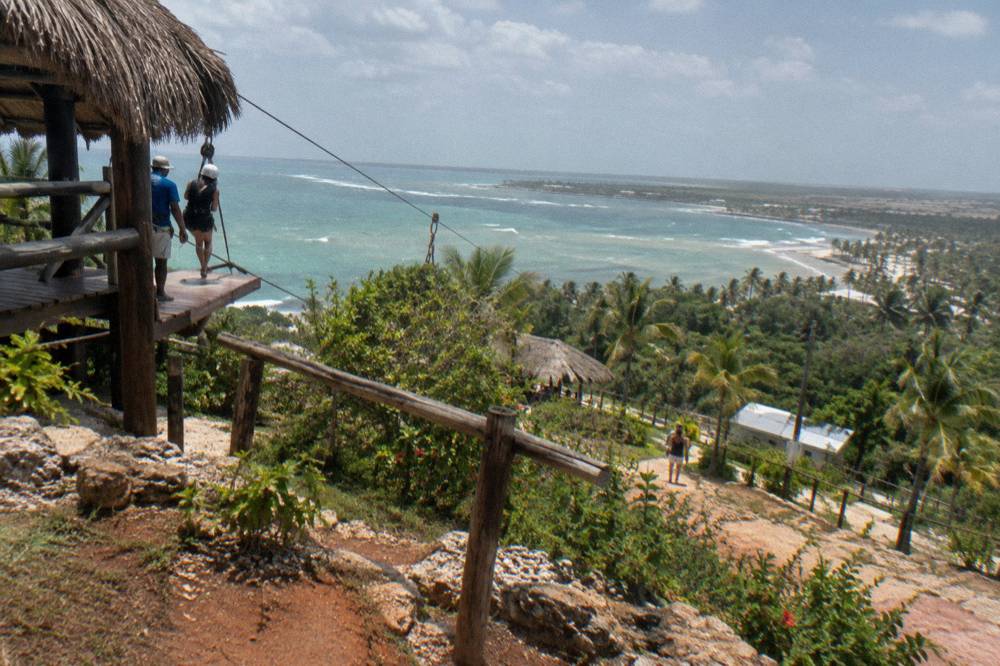
The related tour for this article is the 12-Cable Jungle Circuit, from $90 per person with a 4.5 rating from 236 reviews, and you can check availability alongside the internal 12-cable jungle circuit tour page.
Common Questions About Getting Weighed Before Ziplining
Do You Get Weighed Before Ziplining?
It depends on the operator. Punta Cana listings publish weight and waist limits but most do not describe an on-site weighing procedure, so some courses check with a scale, some rely on the harness fit and the booking form, and the only way to know for your course is to ask the operator through the listing before you book.
What Is The Weight Limit For Ziplining In Punta Cana?
There is no single limit. Among the tours compared here, maxima range from 270 lb on one park listing to 300 lb on another, with most courses at 127 to 130 kg (about 280 lb). Several listings also cap waist circumference at 112 cm (44 inches).
Do They Weigh You In Front Of Everyone?
Where a check happens it is normally folded into the gear-up and harness fitting rather than staged separately, but no verified listing describes the exact procedure. Ask the operator in advance if privacy is a concern; private and small-group tours make that conversation easier.
What If I Am Over The Limit On The Day?
The guide will decline you for that activity, and refunds or reschedules fall under the listing's cancellation terms. Free cancellation is listed on every Punta Cana zipline listing, typically up to 24 hours before, which is why checking the number before booking matters.
Do Children Get Weighed Too?
The listings mainly use age and height rules for children, minimum age 6 on several courses and 5 on one, plus a minimum height of 1.30 m at the Bavaro park. Two Monkeyland listings, the Monkeyland and Zipline combo and the Adventure Bundle, also set a 20 kg (44 lb) minimum weight so light riders do not stall mid-cable.